space+ nadine zinser-junghanns
BETA - die verhandelbare
bewerbung für die kuration des deutschen pavillons der biennale 27 in venedig, 2026
in kooperation mit kathia von roth, heike simmer, johanna wallenborn + nuriye tohermes
BETA – die verhandelbare
the German Pavilion is based on a simple but consequential assumption: architecture loses its reality where it stabilizes itself as a finished image. where it becomes fully formulated, fully controlled, and fully consumable, it withdraws from the very relationship from which it originally emerges — the relationship between human beings, space, action, and time.
BETA – die verhandelbare
responds to this with an architecture of openness. the pavilion is not a completed work, but a spatial structure in a state of transformability. the unfinished is not understood as a deficiency or as a form of technical provisionality, but as a deliberate cultural position: a refusal to fully determine space, and an invitation to shape it as a relational, social, and shared practice.
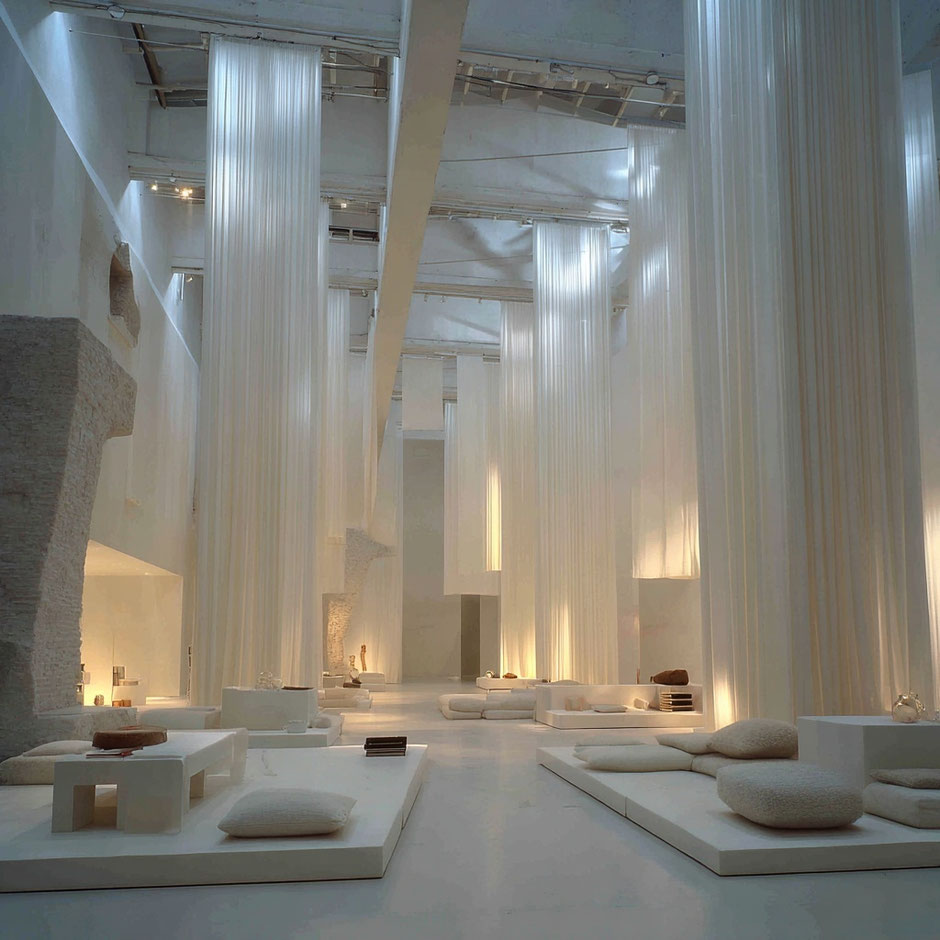
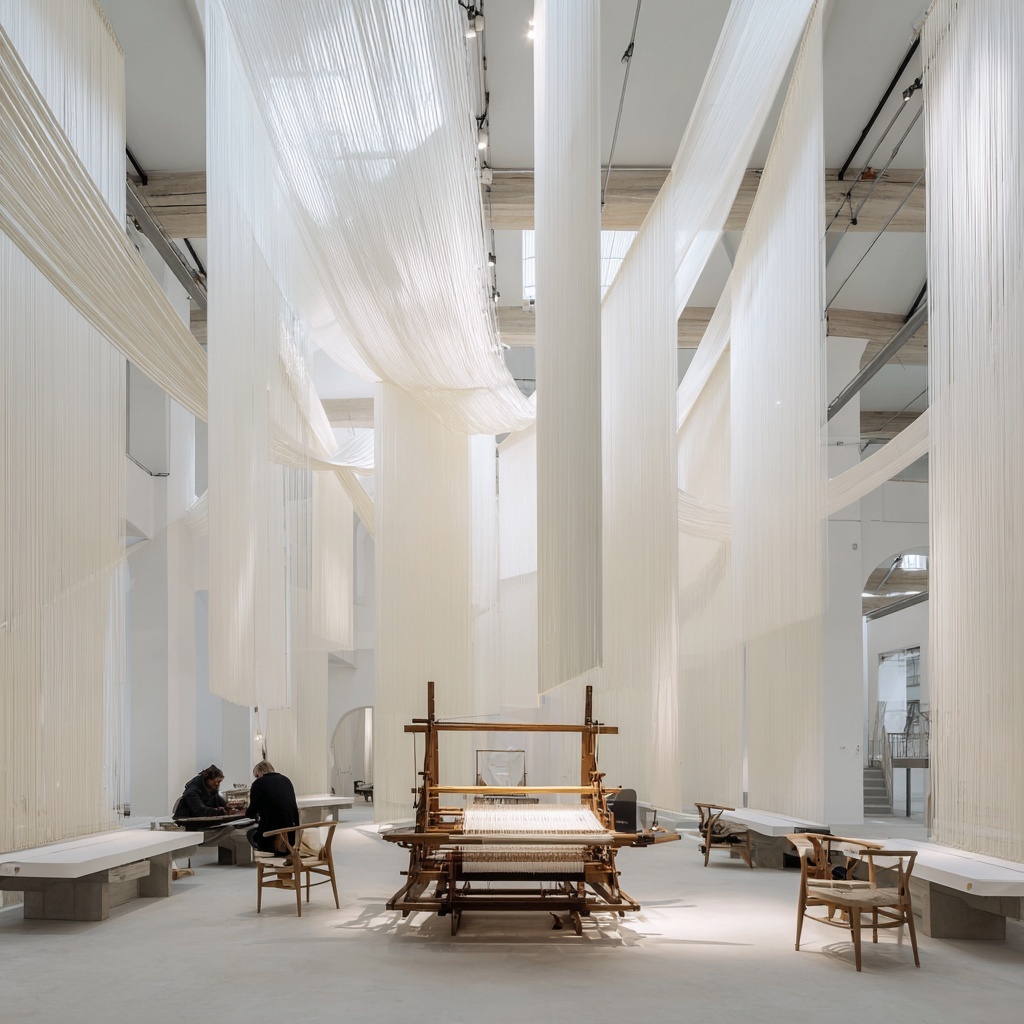
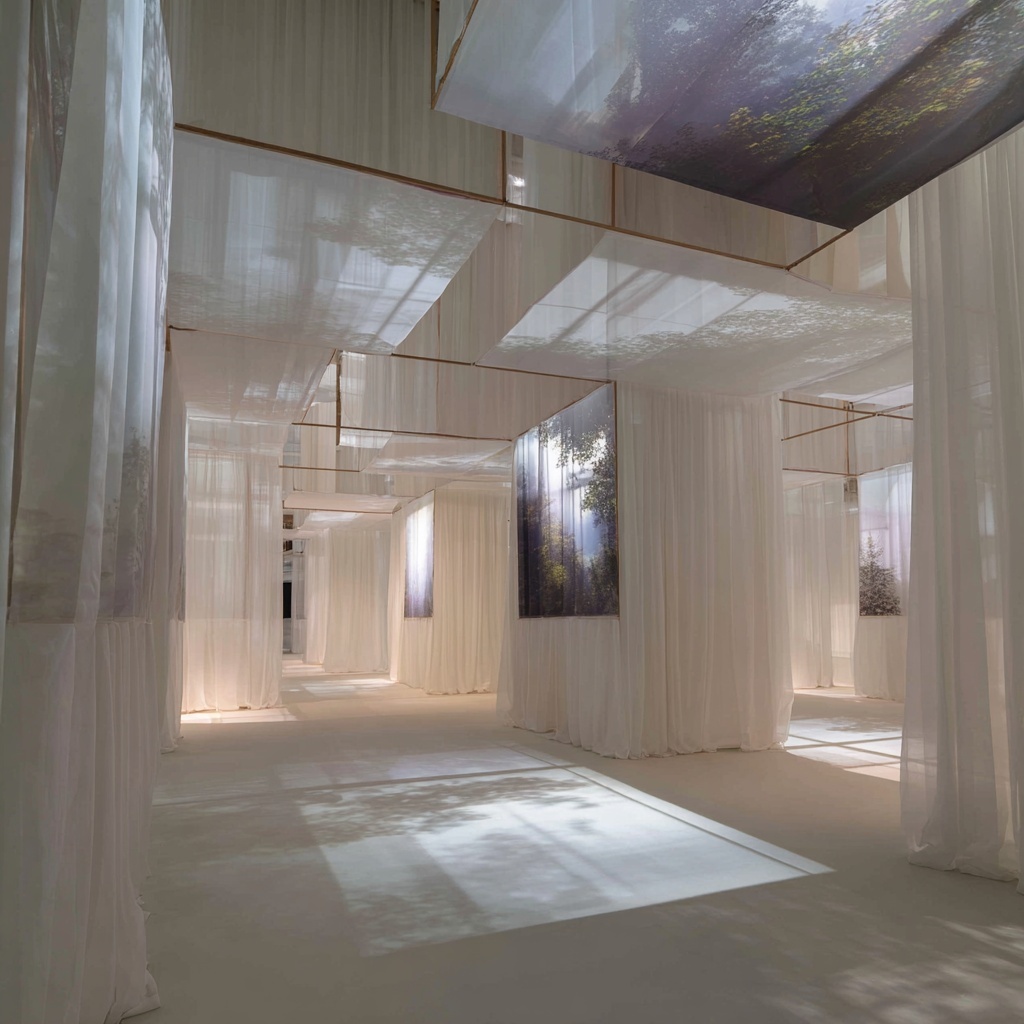
the contribution deliberately combines low tech and high tech. simple, real, and sensorially tangible elements — curtains, textile envelopes, floor coverings, stools, reflections, a loom, and transformable cabins — form the physical basis of the pavilion. this reduced spatial order is interwoven with a digital, AI-supported layer that overlays, shifts, and expands the analogue space in real time. In this way, a negotiable structure emerges in which material, social, and projected realities act together.
spatial concept
from a few clear elements — transformable cabins, curtains, textile envelopes and floor coverings, reflections, stools, projection surfaces, and a loom — a field of relationships emerges rather than a fixed final form. textile elements are understood not merely as material, but as a spatial principle of connecting, layering, and negotiating. the order of the pavilion is legible, but not rigid; its aesthetic is calm, reduced, and precise, its structure clear, yet not authoritarian.
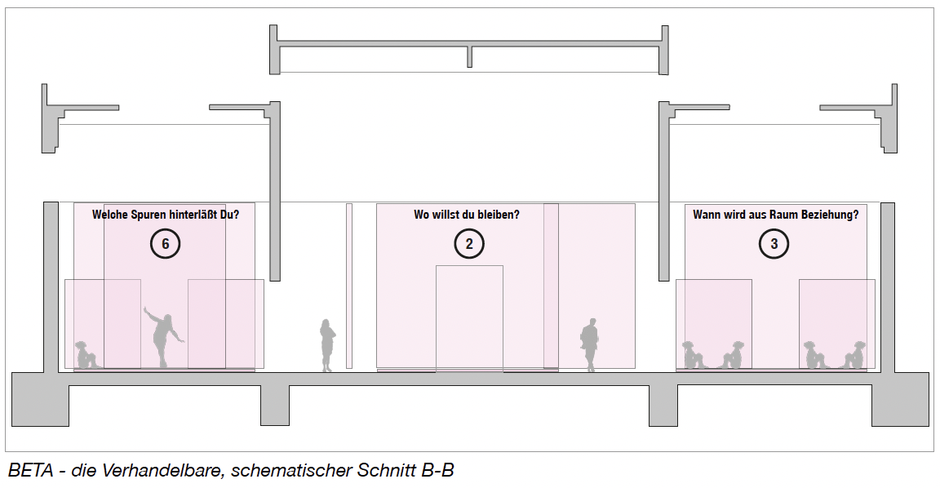
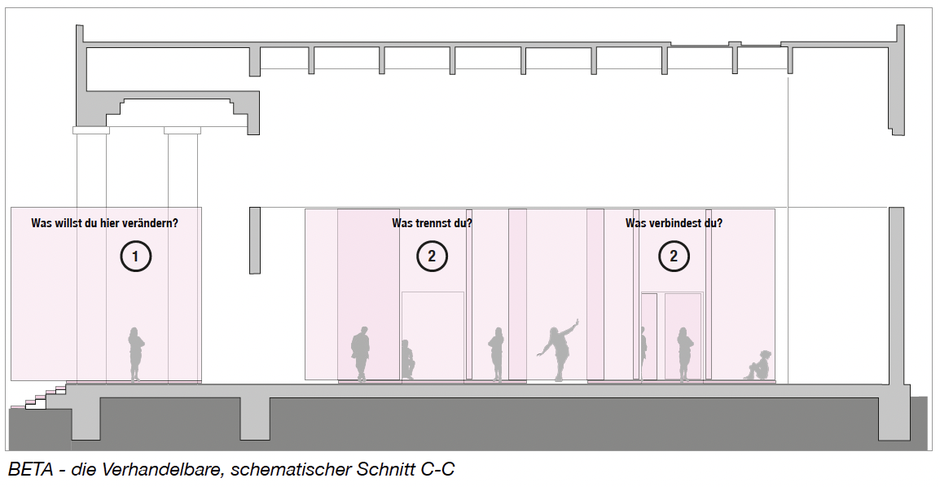
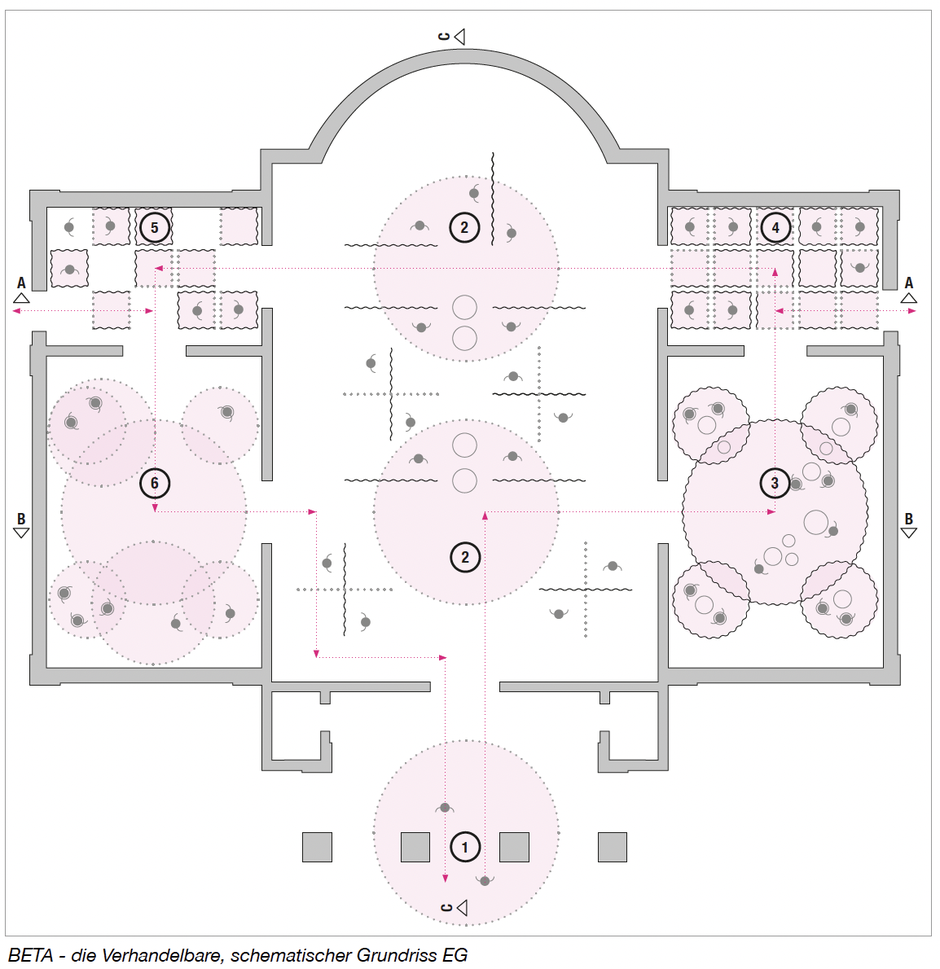
the spatial dramaturgy deliberately takes up the existing structure of the pavilion: a large central main space, two larger front chambers, and two smaller rear chambers, each with its own entrance and exit. this does not produce a uniform sequence of similar rooms, but rather a clear distribution of zones of dwelling and transition.
the main space forms the open shared forum; the larger front chambers become spaces of lingering, social condensation, and collective action; the smaller rear chambers function as concentrated spaces of transformation, in which perception, projection, and spatial transition are intensified.
1 Auftakt l Abklang
2 Forum: der gemeinsame verhandelbare Raum
3 Resonanz: Tee, Gespräch, Verknüpfung, soziale Nähe
4 Filter 1: Verdichtung, Projektion, Verschiebung
5 Filter 2: Überlagerung, Übergang
6 Spur: Erinnerung, Nachbild